DIY design is fine for quick, low-stakes jobs like a social post or a one-time flyer. Hiring a professional graphic designer pays off when the work represents your whole business: your logo, signage, packaging, and anything customers will see again and again. The real question is not "which is cheaper?" but "which will cost me less over the next three years?" This guide compares both options head to head so you can decide with confidence.
In this article
DIY vs. hiring a designer: how do they compare?
FactorDIY (templates and design apps)Professional graphic designerUpfront costFree to low (app subscription)Higher, one-time or per projectYour timeHours per piece, plus the learning curveA few hours of briefing and feedbackUniquenessShared templates, so others may look like youDesigned around your business and audienceConsistencyDrifts over time without a systemBuilt on a defined color, font, and logo systemPrint readinessOften needs fixing at the print shopDelivered with correct formats, bleed, and colorScalabilityHard to extend to signs, vehicles, or packagingLogo and files built to grow with youBest forQuick, temporary, low-stakes piecesBrand identity and long-lived materials
When is DIY design actually fine?
DIY is a smart choice when the piece is short-lived and the stakes are low. Good examples include a social media post for this weekend's special, an internal slide deck, a flyer for a one-time bake sale, or a quick mockup to test an idea before you invest in it. A free or low-cost app with a clean template can do the job well.
To get the most from DIY, follow three rules: stick to one or two fonts, use only your brand colors, and keep layouts simple. If you do not have brand colors yet, that is usually the first sign it is time to talk to a designer.

When does DIY start costing more than it saves?
DIY becomes the expensive option in these situations:
You are creating your logo. Your logo shows up on everything. A weak or borrowed one gets reprinted, repainted, and re-uploaded every time you fix it.
Your materials do not match. If your website, business cards, and signage each look slightly different, customers have a harder time recognizing and trusting you.
You are paying for reprints. Wrong file formats, missing bleed, and screen-only colors lead to wasted print runs.
Your time is the real cost. If you spend several evenings on one flyer, that is time you are not spending on customers or students.
Others share your template. Popular templates are used by thousands of businesses, so a competitor may end up looking just like you.
For schools, the same logic applies. A mascot or logo that appears on signage, spirit wear, and the website needs one consistent, professional version that staff can reuse for years.
What does the difference look like in practice?
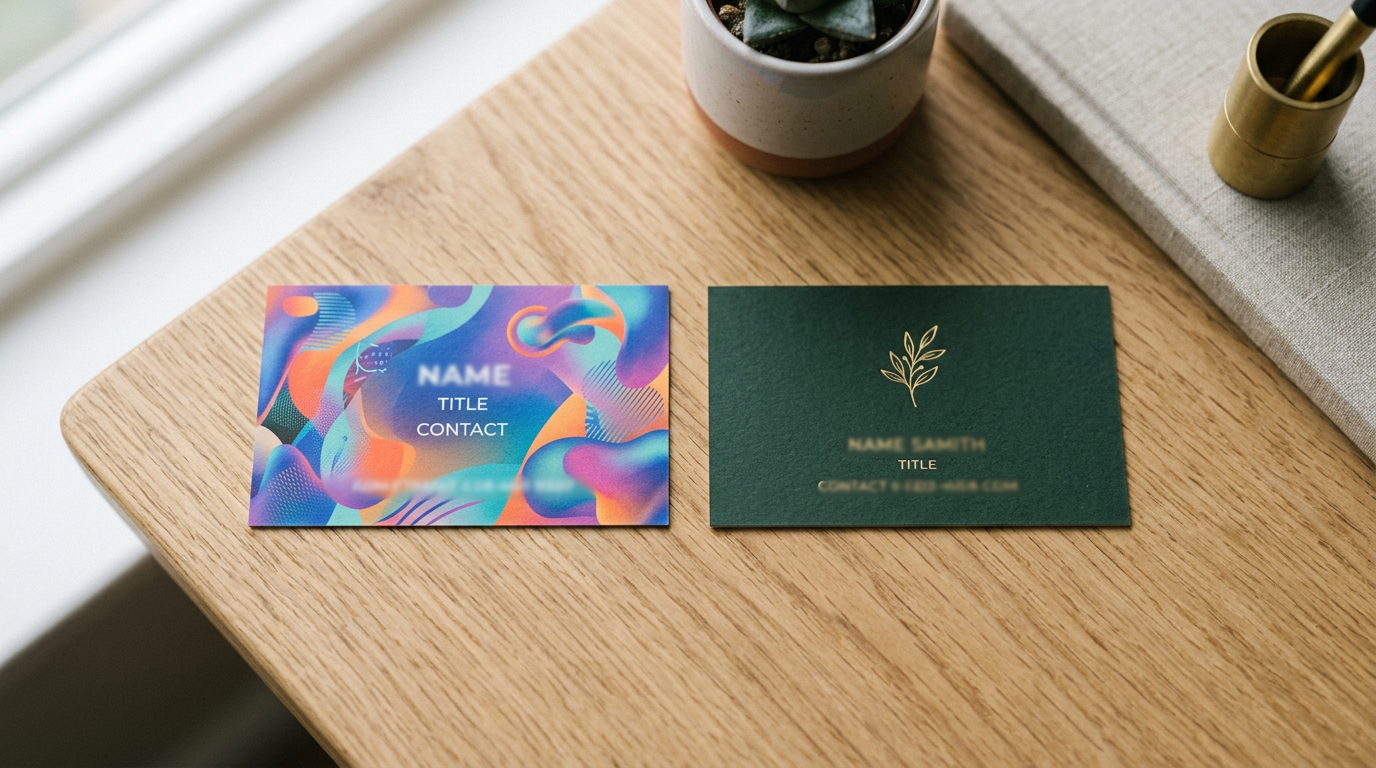
Take a fictional neighborhood plant shop. On the left is a typical template business card: a gradient header, three different fonts, and a stock clip-art leaf. Nothing on it is wrong exactly, but nothing on it belongs to this shop either. The text is hard to read against the gradient, and the card would look at home on any other business in town.
On the right is a custom version. It uses one serif font, one sans-serif font, and two colors. A simple leaf mark gives the shop a memorable symbol that can be reused on its sign, its bags, and its website. The card is easy to read, feels intentional, and matches the storefront. That consistency is what makes a small business feel established.
Service spotlight
https://www.aguilardesignco.com/services/brand-identity Brand Identity & Logo Design.
A logo, color palette, and font system built for your business or school, delivered with files you own.
Custom quote https://www.aguilardesignco.com/contact Book a free consultation →
Is there a middle path between DIY and a full custom project?
Yes, and it is the option many small businesses and schools find most practical. Have a designer create the foundation once: your logo, color palette, fonts, and a handful of editable templates. Then your team can handle day-to-day items such as social posts and announcements in a design app, while staying on brand.
This hybrid approach gives you professional consistency where it matters most and keeps ongoing costs low. It also solves the most common DIY problem, which is not a lack of effort but a lack of a system to follow.

Frequently asked questions
Is it cheaper to design my own logo?
It is cheaper upfront, but not always over time. A DIY logo built from a template may not be unique, may not work in one color or at small sizes, and may need replacing once your business grows. A professionally designed logo is a one-time investment that can last many years.
Can I use Canva or a similar app for my business materials?
Yes, for many everyday items. Design apps work well for social posts, simple flyers, and internal documents. For your logo and anything that will be printed in volume, a professional will usually deliver better, more distinctive results.
How do I know it is time to hire a designer?
Common signs include: you are launching or rebranding, your materials look inconsistent, you are about to place a large print order, or you are spending more time on design than you can afford.
What should I ask a designer before hiring?
Ask about their process, pricing, revision policy, timeline, and whether you will own the final files. Our guide How to Hire a Graphic Designer for Your Small Business: 7 Questions to Ask walks through each one.
Do schools need a professional designer too?
Often, yes, especially for a logo, mascot, or enrollment materials that families see repeatedly. See our complete guide to school branding for details.
Related reads: How Much Does It Cost to Hire a Graphic Designer? and 7 Branding Mistakes Small Businesses Make. For a deeper look at the Canva-versus-designer trade-offs, see this comparison from ManyPixels.
Not sure which route fits your business or school?
Tell us what you need and we will give you an honest recommendation, even if the answer is "DIY this one."
https://www.aguilardesignco.com/contact Book a free 20-minute consultation →
No obligation. Straight answers.